Fibre vs Cable vs DSL: Which Is Best?
When you shop for home internet, three technologies dominate the choice: fibre, cable and DSL. They all deliver the internet to your home, but they use different cables, reach very different speeds and behave differently when the network is busy. Knowing how each one works makes it much easier to choose between them.
This guide compares the three in plain English: what they are, how fast they go, and which one suits different kinds of household.
What Is Fibre Internet?
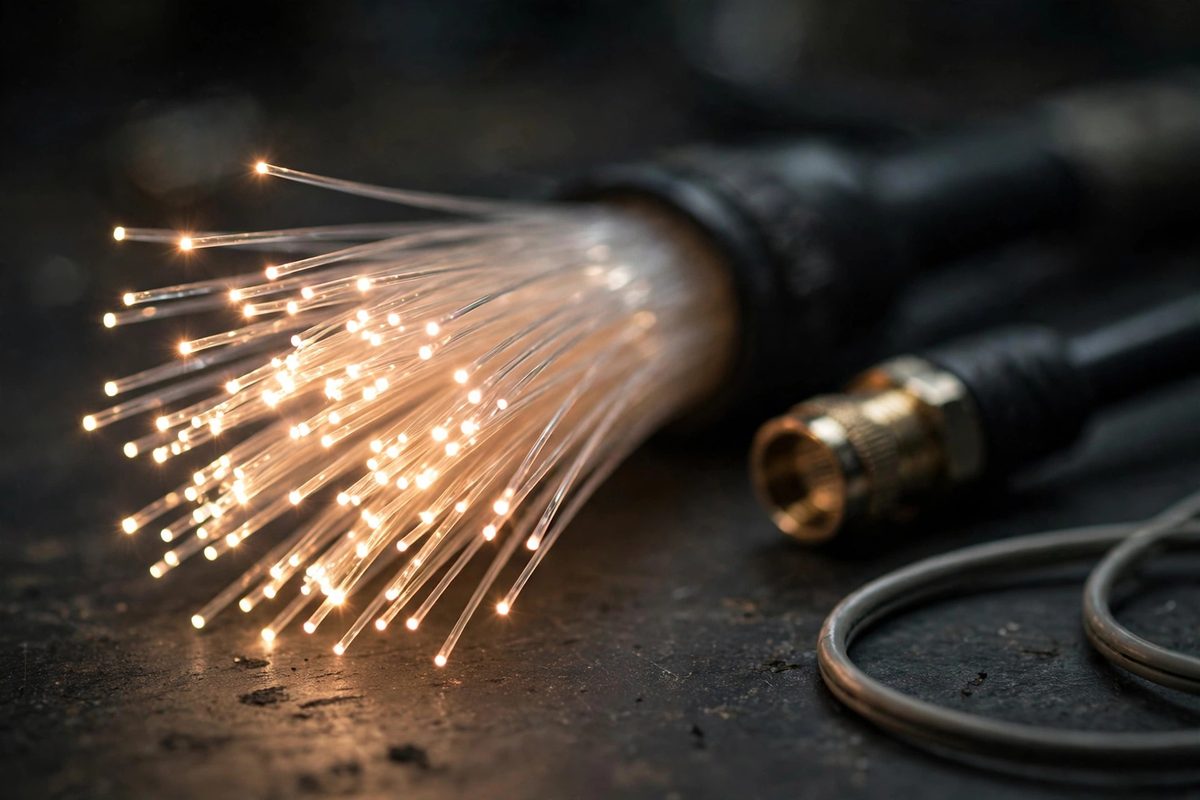
Fibre internet sends data as pulses of light through thin strands of glass. Light travels extremely fast and barely weakens over distance, so fibre offers the highest speeds available to homes, often from 100 Mbps up to 1,000 Mbps or more. It also has very low latency, which is the delay before data starts moving, and that matters for gaming and video calls.
Fibre's biggest advantage is upload speed. Many fibre plans offer the same speed up and down, so uploading a large video or backing up photos takes minutes instead of hours. Its main drawback is availability: fibre is still being rolled out, and many streets do not have it yet.
What Is Cable Internet?
Cable internet uses the same coaxial cables that once carried TV signals. It is widely available in towns and cities and offers fast download speeds, typically from 100 Mbps to 1,000 Mbps. For most households, cable is more than fast enough for streaming, gaming and working from home.
Cable's weakness is upload speed, which is usually far lower than download, often 10 to 50 Mbps even on a fast plan. Cable networks are also shared between nearby homes, so speeds can dip in the evening when everyone is online. That evening slowdown is a common complaint, and our guide to why internet slows down at night explains it in detail.
What Is DSL Internet?
DSL runs over ordinary copper telephone lines. It is the oldest of the three and the slowest, with typical speeds of 5 to 100 Mbps depending on how far your home is from the telephone exchange. The further away you are, the slower it gets, because the signal weakens along the copper wire.
DSL is still common in rural areas where neither fibre nor cable has arrived. It can be enough for a single person who mainly browses and watches HD video, but it struggles with 4K streaming, large households and anyone who works from home with video calls.
Fibre vs Cable vs DSL Compared
| Fibre | Cable | DSL | |
|---|---|---|---|
| Typical download | 100 to 1,000+ Mbps | 100 to 1,000 Mbps | 5 to 100 Mbps |
| Typical upload | 100 to 1,000 Mbps | 10 to 50 Mbps | 1 to 20 Mbps |
| Latency | Very low | Low | Moderate |
| Evening slowdowns | Rare | Possible | Rare |
| Availability | Growing, not everywhere | Wide in towns and cities | Very wide, including rural areas |
| Price | Mid to high | Mid | Low |
Which One Should You Choose?
Choose fibre if it is available on your street. It is the fastest and most future-proof option, and its fast uploads make a real difference for video calls, cloud backups and anyone who works from home. If you are weighing up your speed needs, our guide to what Mbps and Gbps mean will help you read the plan numbers with confidence.
Choose cable if fibre has not reached you yet and you want fast downloads at a fair price. It handles streaming and gaming well, and most households will never notice its slower uploads. Just check the upload figure before signing up if you work from home.
Choose DSL only when it is the only wired option available, or when your needs are light and price matters most. If you have DSL and your household has grown busier, check whether fibre or cable has arrived on your street recently: rollouts move quickly, and many areas have been upgraded in the last year or two.
Whatever you choose, remember that the technology sets the ceiling, not the experience. A fibre plan with a badly placed router can still feel slow in the back bedroom. Pair the right connection with good Wi-Fi, and read our guide to download vs upload speed if you want to understand the two numbers on every plan.
What About 5G Home Internet?
5G home internet is a newer option that uses mobile networks instead of a cable into your home. It can be a good fallback where wired options are slow, and it is quick to set up because there is no installation visit. Speeds vary more than wired connections, though, and depend on signal strength and how busy the local mobile network is. If you are considering it, compare it with the wired options above rather than treating it as a direct replacement for fibre.
Frequently Asked Questions
Is fibre always better than cable?
For speed, latency and uploads, yes. But if your household only streams and browses, a fast cable plan will feel the same in everyday use, and cable is available in many areas where fibre has not arrived yet.
Can I get fibre if my street does not have it yet?
Not until the network is built to your home. Check each provider's availability tool with your address, and register your interest: providers often prioritise areas where many residents ask for it.
Is DSL good enough for working from home?
It depends on the speed you actually get. Below 25 Mbps, video calls and cloud file work can struggle, especially if others are online at the same time. If that is your situation, check for fibre or cable availability first.
Test Your Connection Now
Run a free speed test and see your real ping, download and upload speeds in under a minute.
Start Speed Test